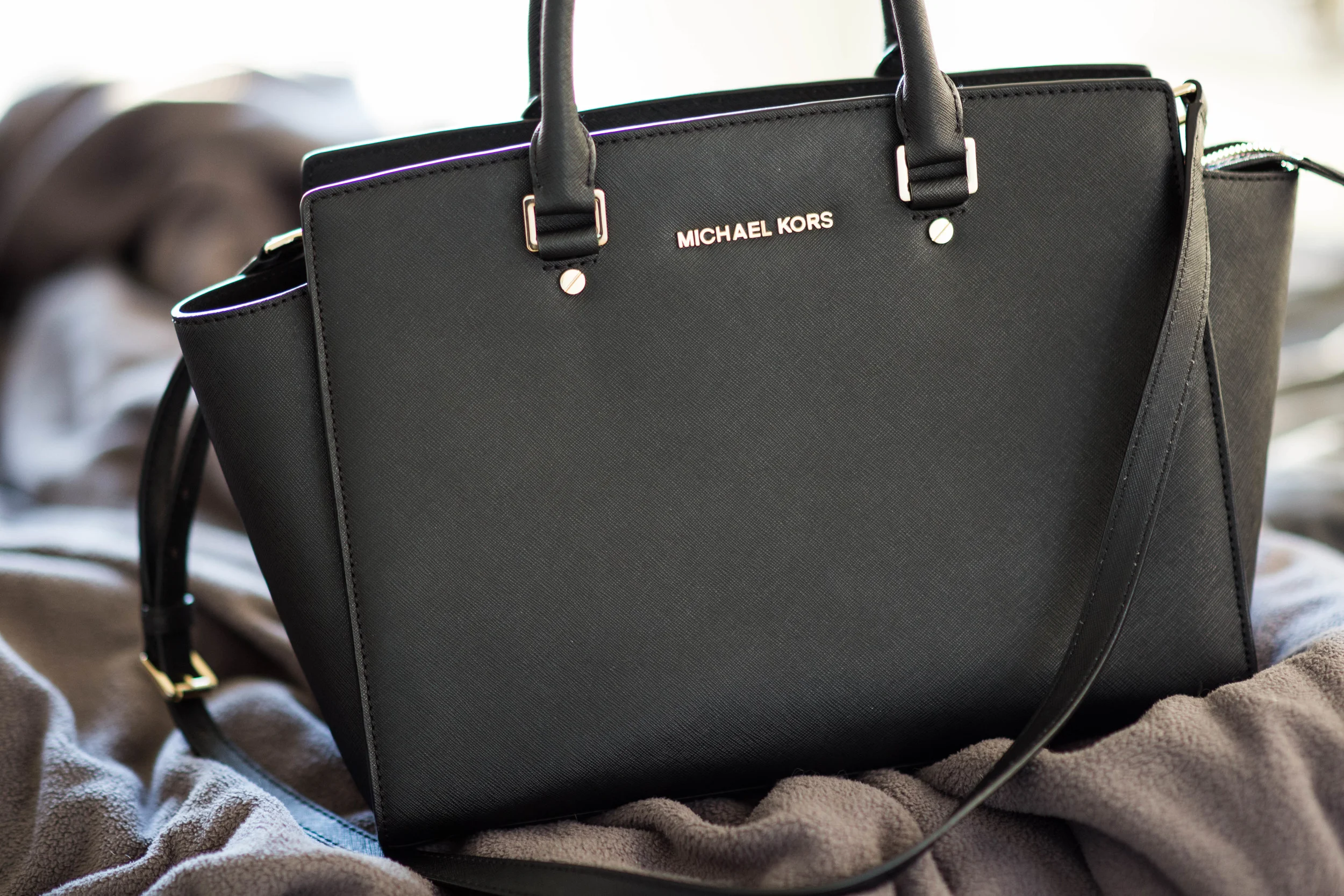
After French label Céline debuted the winged luggage tote in 2010, other designers high- and low-end began to imitate its distinctive flared gussets, releasing products with similar silhouettes in the years that followed. In the contemporary range, the most successful of these winged luggage-influenced beauties is the MICHAEL by Michael Kors "Selma," easily the most understated piece to come out of Kors' diffusion range.
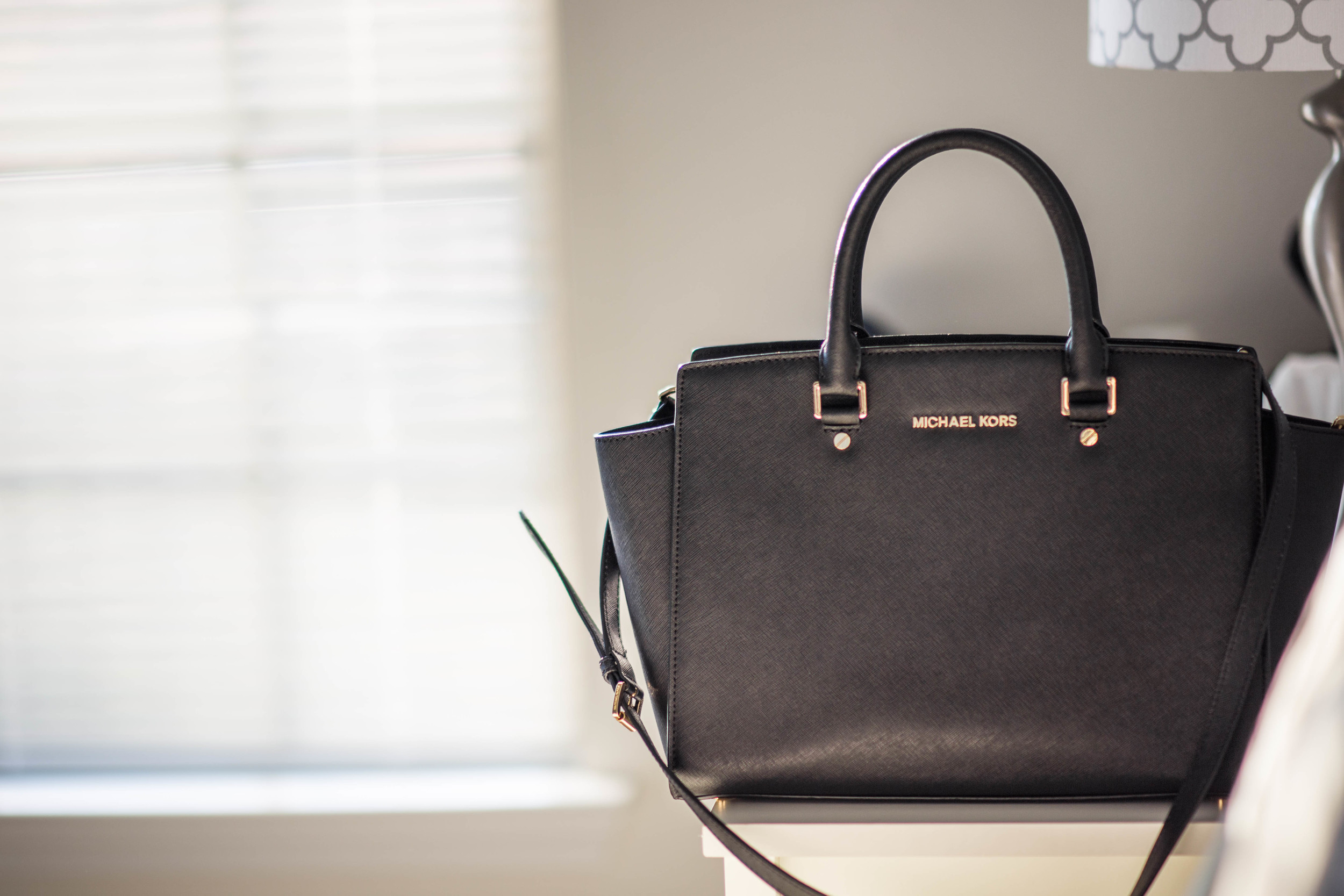
MICHAEL by Michael Kors is not known for exercising restraint or subtlety. A quick glance at the site's offerings reveals a host of bags in blocky shapes and loud colors with logo hardware, monograms, and chain link accents. The Selma, though, is different -- so different, in fact, that it hardly feels like a Kors piece. It's not out of place in my muted, professional-looking bag collection.
My thoughts below.
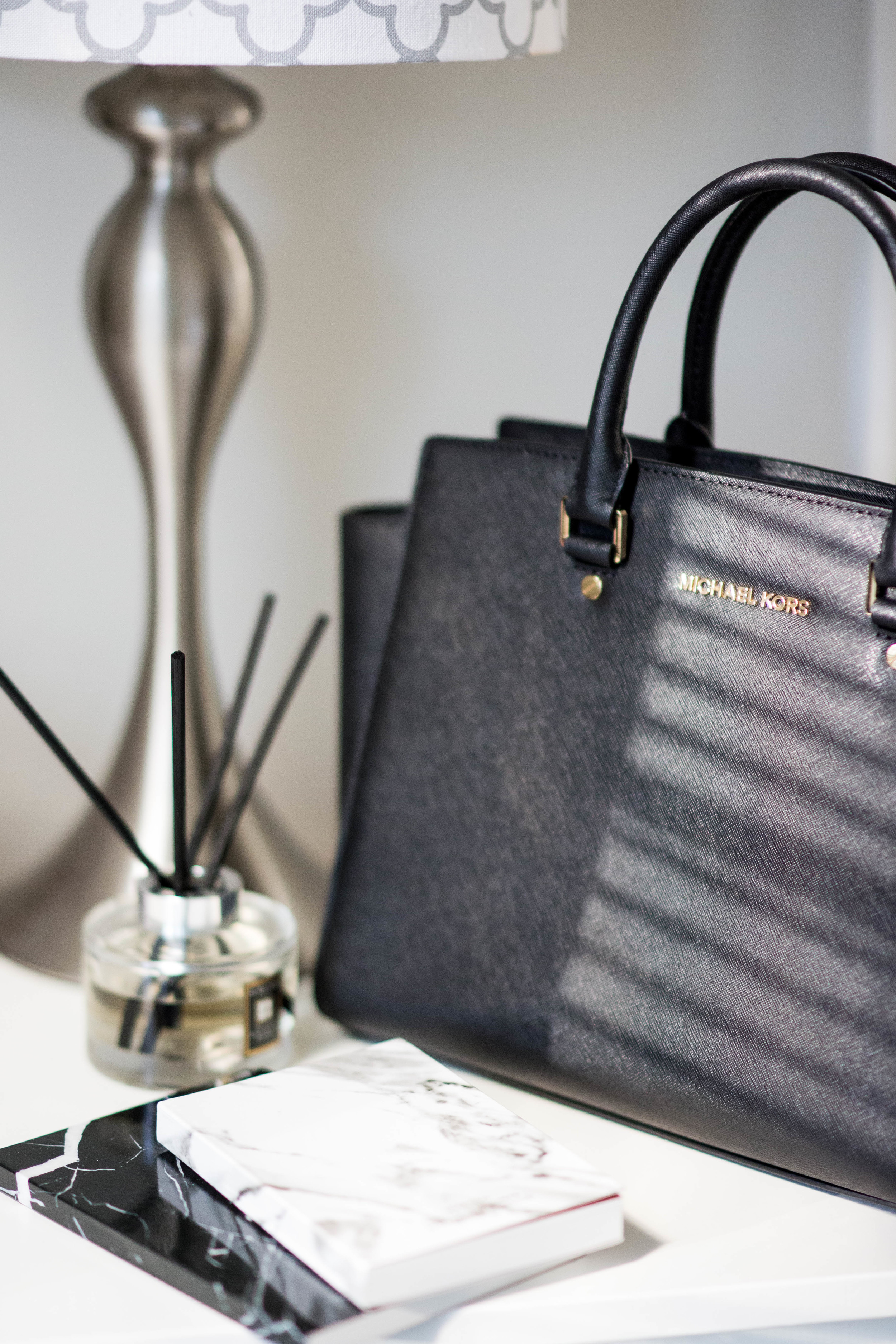
Diffuser by Jo Malone, notebooks by Dear Maison via Poketo.
Measurements
Dimensions: roughly 13" x 10" x 5"
Drop: handles 4", adjustable strap 18"
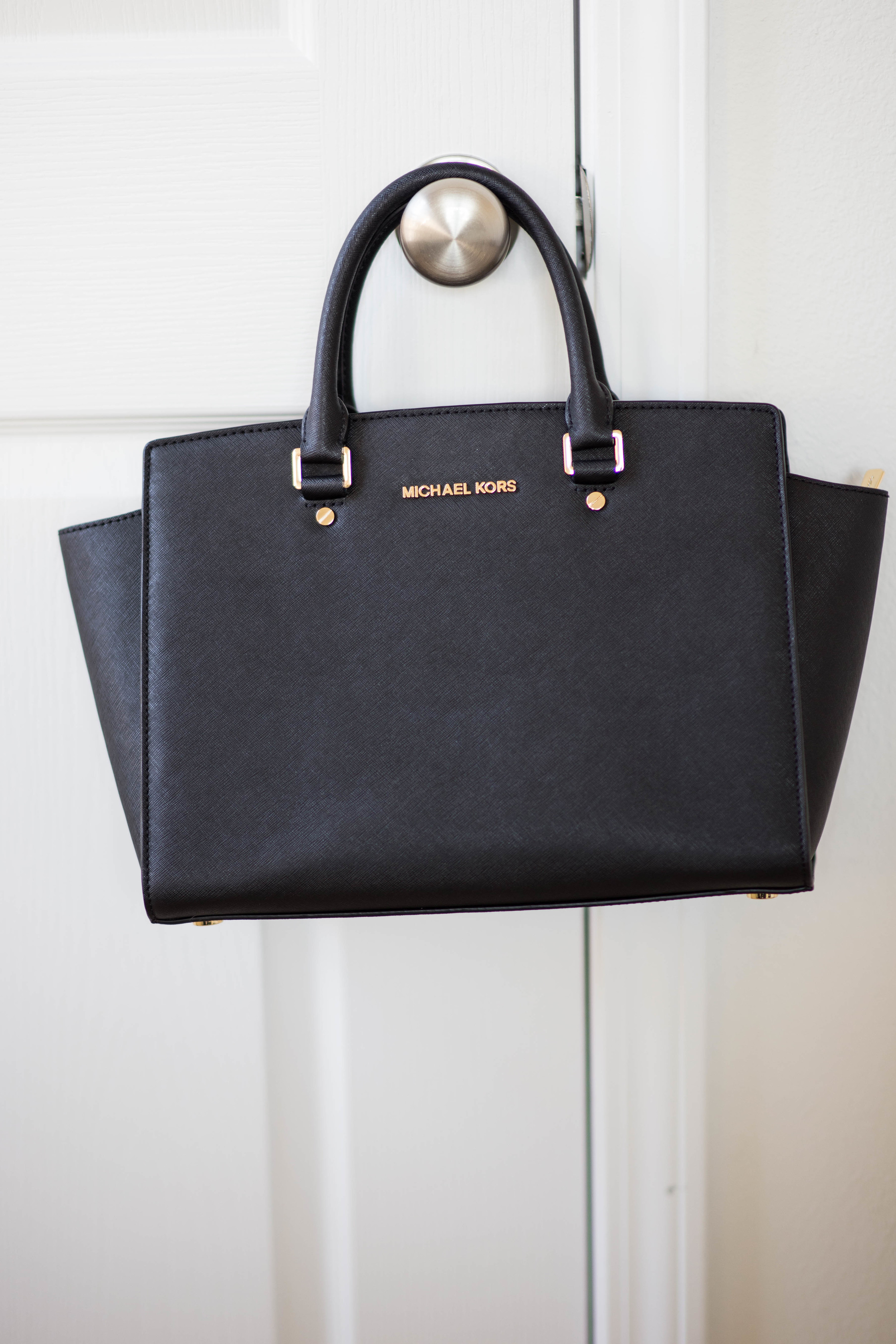
Construction
Saffiano leather with cloth lining
4 pockets, incl. 1 that zips
Aesthetics
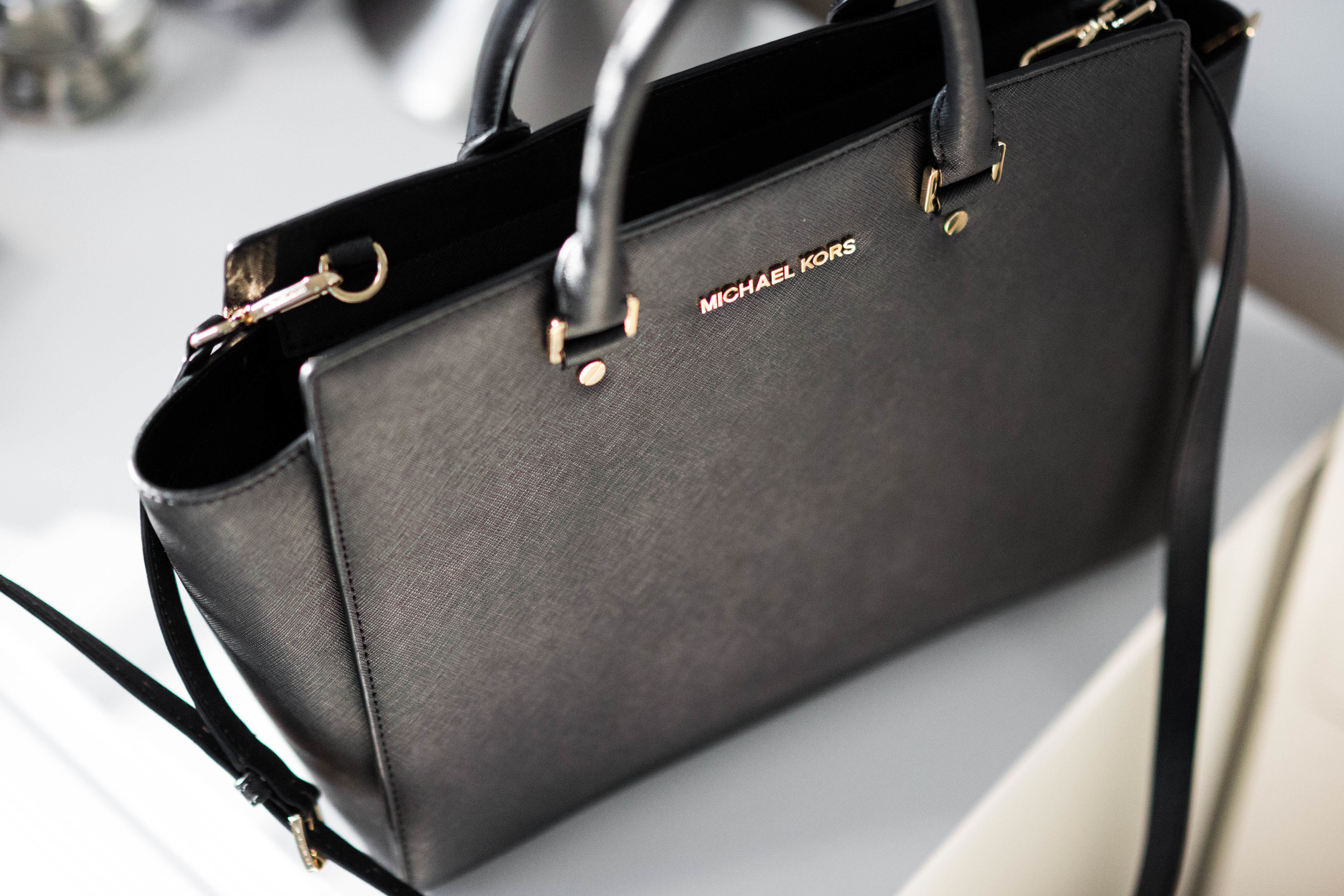
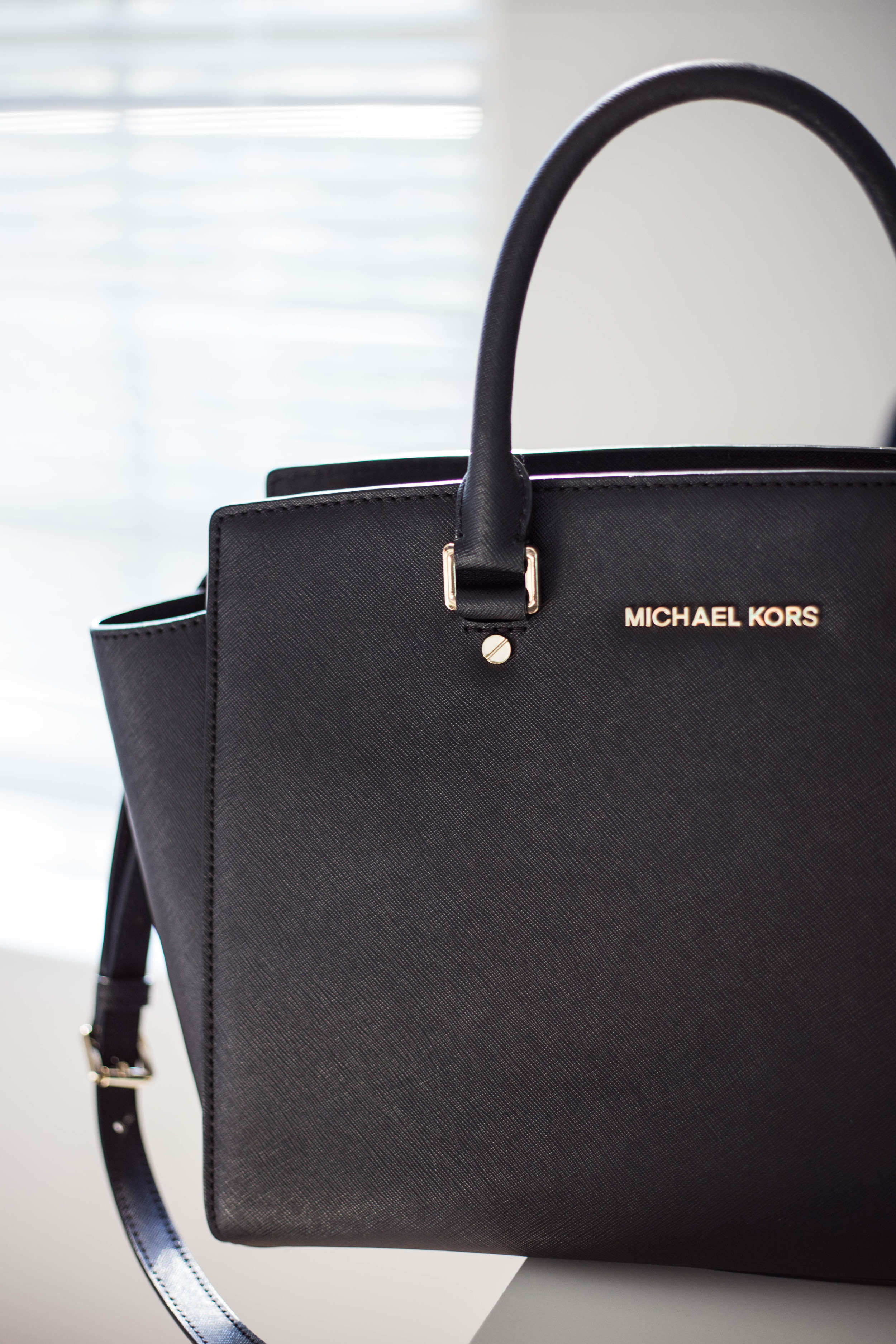
Clearly the Selma photographs well. It's angular, structured, and sports minimal hardware, all atypical of its siblings and punching well above its $358 price point. (Figure cited is for the large size, which is no longer available. The medium, its replacement, retails at $298.) It comes in a variety of colors and materials, including some colorblock leather-and-fabric ones, and while all are popular, I find the bag does best in a solid neutral shade that lets its silhouette shine.
A nitpicky opinion: I'm not fond of the squarish hardware that attaches the bag's handles to its body. I wish Kors' diffusion line team had decided to fix the handles directly to the bag à la Saint Laurent's Sac de Jour, but doing so likely would have changed the bag’s price point.
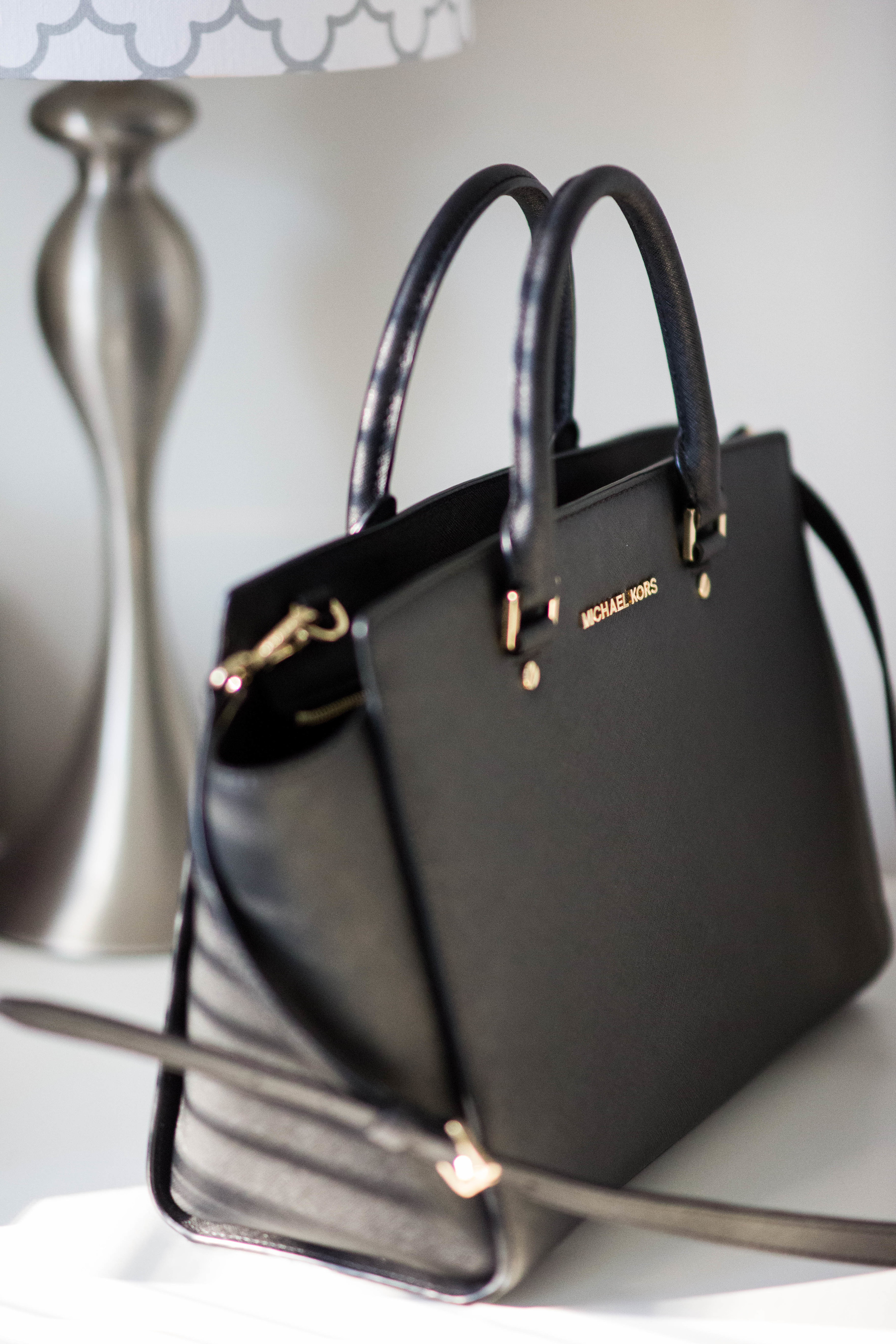

Interior pocket view.
Daily Use
I picked up the large Selma in summer 2014, and honestly, I regretted the gargantuan size of it until I started seeing the medium pop up everywhere this past summer and fall. The large is more proportionate, with a more pleasing gusset-to-body ratio. It also holds more stuff without being unwieldy, which, as a pack rat, I appreciate. It has the volume of a tote with the rigidity of a briefcase, easily holding a continental wallet, phone and charger, cereal bars, tablet, makeup, and even a DSLR camera...all at once.
The Selma comes with a detachable strap, which I frequently used in the beginning, as I was unused to hand-carrying a bag. Over time, I grew more comfortable with the look of the large, rectangular bag in the crook of my arm (how very Los Angeles) and now carry it there, with the strap tucked in.
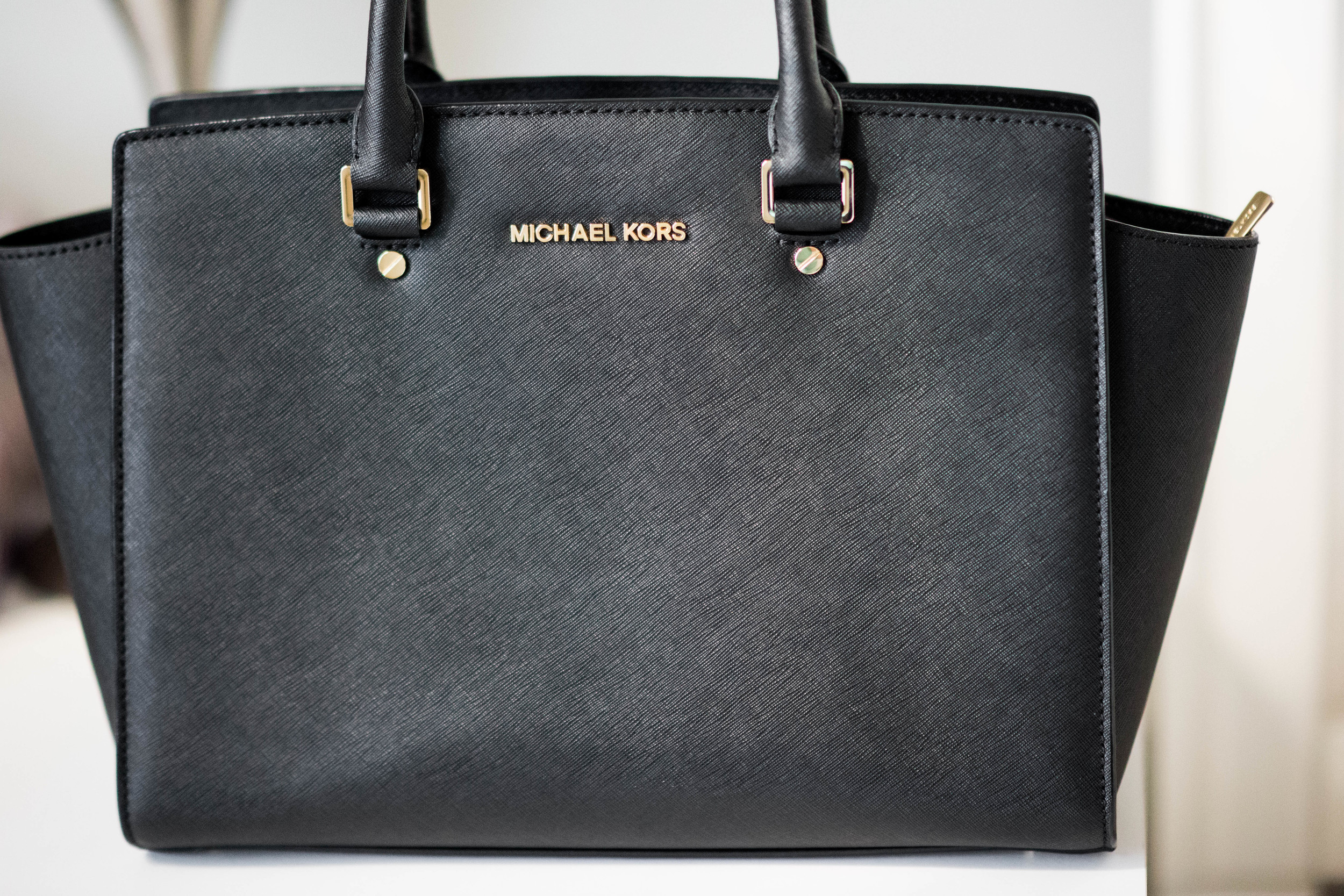
The Selma’s zipper placement is fantastic: tucked down slightly and framed by stiff leather strips on either side. This is not a bag that will spill your belongings, even if it is unzipped and tips over on its side, since even the open zipper has enough support on either side that everything is contained. This gives me flexibility in how I carry it: I can either use it like a shopping tote and throw things in the open top, or treat it like a satchel and secure everything beneath the zip.
Does the Selma go casual to dressy? Eh, it's debatable. While I've seen people style it casually, the structured look of the Selma is probably more of a professional silhouette -- especially if the bag is black. In black, it's almost indistinguishable at a distance from the executive Prada range. When carrying the Selma I often feel like I need to try a little harder (no t-shirts and certainly no sneakers).
Maintenance
When it comes to care, the Selma is out-of-this-world accomodating. It is virtually indestructible, does not fade, is unaffected by humidity or rain, and its saffiano body is just about impossible to scratch. Once in a while I go over it with Collonil cream to clean off smudges, but it does not need moisture treatment the way higher end leather would.

Quality & Value
IMO the Selma is the ultimate contemporary range bag. It doesn't run in the let's-not-push-it-for-this-level $500s to $600 range like many Kate Spade or Tory Burch pieces -- especially now that the $358 large size is discontinued, leaving the $298 medium size the priciest Selma option.
That said, it also doesn't feel like a budget bag. The saffiano leather, though it does cave slightly with wear, shows virtually no signs of aging, even without being stored outside of its dust bag and in a hot, humid climate. Mine looks brand new, even though it's two years old and I treat it mercilessly. The bag even has metal feet to protect the bottom from the surface you're setting it on. That's a nice touch, considering that not even Givenchy (ahem, leather feet on the Antigona) is great about executing this protective feature.
I also appreciate that where corners are cut on the Selma, it's in invisible places. The stitching on the strap is not as secure as I'd like to be, but let's be real, no one looks there. The lining is an unappealing faux-silk monogrammed fabric, but I can live with that, as it won't be the end of the world to stain it.

Pros & Cons
(-) It's Michael Kors, not occasion-versatile, bottomless pit, cheap interior lining, saffiano does not feel luxurious, heavy when full, awkward hardware
(+) under $300 in medium size, easy to care for, both hand- and shoulder-carried, structured, great work bag (fits a tablet or laptop), roomy, logo is subtle, many pockets, photogenic
And finally, I can't say how glad I am that the MICHAEL by Michael Kors team managed to resist putting chunky logos all over this piece in particular. So glad. Gotta diversify the offerings, man.
![The Edge of the Earth [2/2]](https://images.squarespace-cdn.com/content/v1/553f9ffbe4b06d466cd3f781/1454616092589-O1PDY1VKSO9OUYU2DBQW/image-asset.jpeg)












![The Edge of the Earth [1/2]](https://images.squarespace-cdn.com/content/v1/553f9ffbe4b06d466cd3f781/1454571358229-JLOHMCT49RKCCN691EZ6/image-asset.jpeg)